How to Create Service Pages That Win Local Leads
Learn how to create service pages that build trust, rank in local search, and turn more website visitors into qualified…
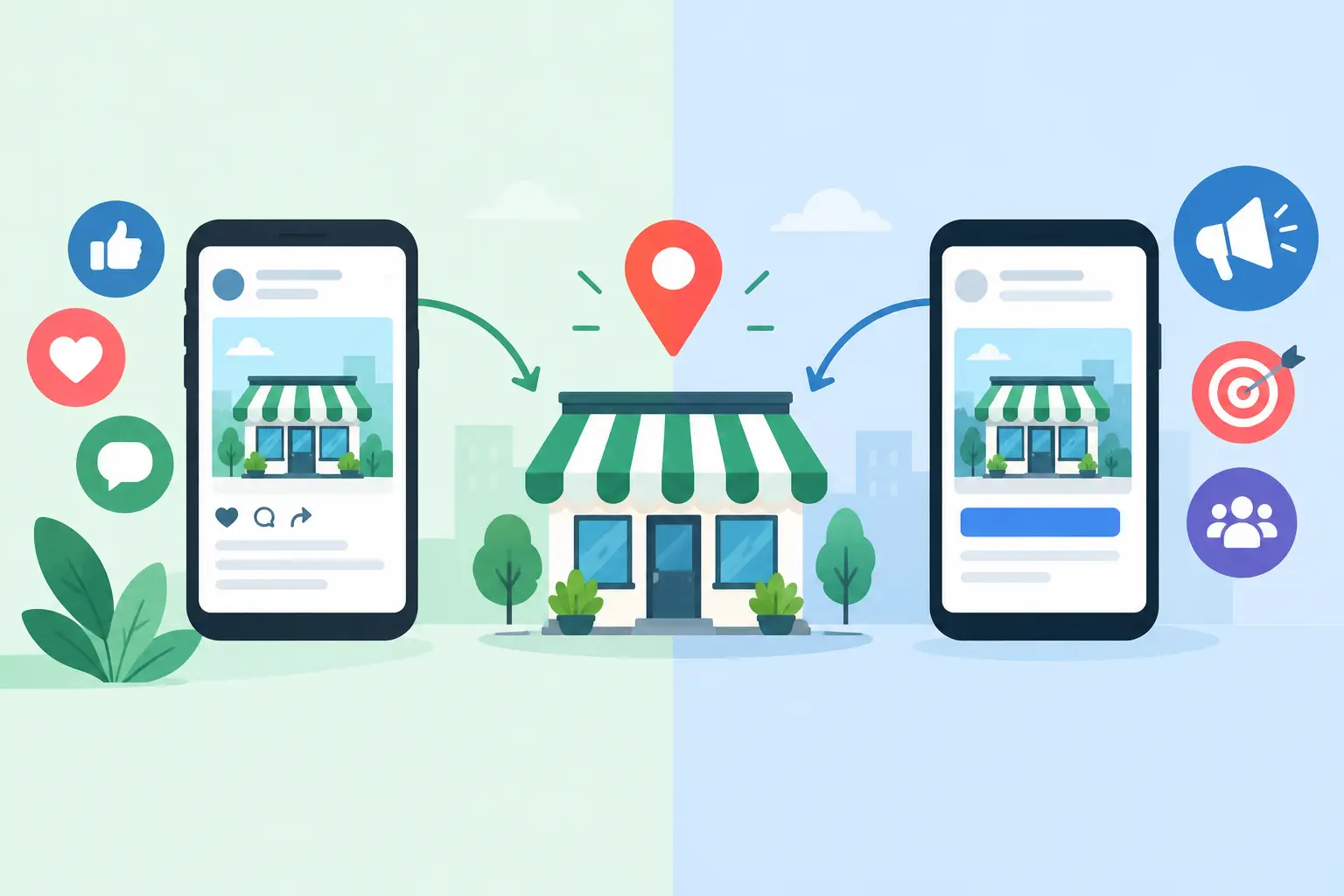
Organic social versus paid social can grow your local business differently. Learn where each fits, what to measure, and how to budget with confidence.
A homeowner who needs a roofer after a storm is not looking for a clever post from three months ago. They are looking for a business that appears credible, nearby, and ready to respond. That is why organic social versus paid social is not a contest between two marketing tactics. It is a decision about how your business earns trust over time and reaches people when they are ready to act.
For customer-facing local businesses, both have a role. The right mix depends on your goals, your sales cycle, your budget, and how consistently your business can show up online.
Organic social is the content you publish without paying for placement: Facebook posts, Instagram Reels, LinkedIn updates, customer photos, team spotlights, educational videos, and community announcements. It is the ongoing public record of how your business operates.
For a dental practice, that might mean explaining what to expect during a first visit, sharing a patient-friendly office update, or introducing a hygienist. For a landscaping company, it could be before-and-after projects, seasonal maintenance tips, and proof that the crew is active in the local area. A cosmetic medicine practice may use organic posts to answer common treatment questions and make the experience feel less intimidating.
Organic content rarely creates a predictable flood of leads from a single post. Its value is cumulative. When someone sees your ad, finds your Google Business Profile, or receives a referral, they may visit your social pages to check whether your business feels current and trustworthy. An inactive account can create doubt. A clear, regularly updated account supports the decision they are already considering.
The biggest strength of organic social is credibility. It gives your business a place to show personality, demonstrate expertise, recognize customers, and prove that real people stand behind the service. It also gives existing customers a reason to stay connected after the sale.
The trade-off is reach. Social platforms do not show every post to every follower, and businesses cannot rely on organic posts alone to reach new prospects consistently. Great content still matters, but it needs time, repetition, and a realistic expectation of results.
Organic social works best when your goal is to stay visible, strengthen trust, support referrals, and give potential customers evidence that you are established and responsive.
Paid social means placing ads on platforms such as Facebook, Instagram, TikTok, or LinkedIn. You set a budget and target an audience based on factors such as location, age, interests, behaviors, or engagement with your business.
Unlike an organic post, a paid campaign can put a specific offer in front of people who do not already follow you. A tire shop can promote seasonal tire specials to drivers within a practical service radius. A roofing company can target homeowners in selected neighborhoods. A healthcare plan can build awareness among an audience that meets relevant demographic criteria, while following the platform and industry rules that apply.
Paid social is especially useful when there is a clear action to promote: booking a consultation, claiming a limited-time offer, requesting an estimate, attending an event, or calling your office. It provides speed and control that organic posting cannot match.
Advertising can produce quick visibility, but an ad alone will not fix a weak message, slow response time, confusing website, or neglected social profile. If someone clicks an ad and finds an outdated page, inconsistent branding, or no easy way to contact you, the budget can disappear without producing useful results.
Paid campaigns also need active management. Targeting, creative, offers, frequency, landing pages, and lead follow-up all affect performance. A campaign that worked last quarter may need adjustment when competition, seasonality, or audience behavior changes.
The goal is not to spend more simply because ads are available. The goal is to spend with a reason, track what happens after the click, and improve the campaign based on real business outcomes.
For most small and medium-sized businesses, organic social should create the foundation and paid social should provide acceleration. That does not mean waiting six months to run an ad. It means making sure your social presence can support the attention an ad campaign creates.
Before investing heavily in paid social, make sure your profiles clearly explain what you do, where you serve, and how customers can reach you. Use recent photos or video, consistent branding, and content that answers the questions customers commonly ask. Confirm that your website or booking page works well on mobile devices. Most importantly, have a process for responding quickly when leads arrive.
Then use paid social to amplify what is already working. If a short video explaining your service earns strong engagement organically, it may be a good candidate for promotion. If customers respond well to a seasonal package or consultation offer, a targeted campaign can expand its reach beyond your existing followers.
There are exceptions. A new business, a business entering a new service area, or a company with an immediate promotion may need paid reach right away. Even then, organic content is still doing its job in the background by helping people validate the business before they inquire.
The most effective strategy considers where a person is in the buying process.
Someone who has never heard of your business may need a simple introduction. Short videos, local project photos, and awareness ads can make your name familiar. Someone comparing providers may need proof: reviews, clear service explanations, staff expertise, before-and-after results, or answers to objections. Someone ready to buy needs a direct next step, such as a quote request, appointment form, phone call, or message option.
Organic and paid social can support all three stages, but their strengths differ. Organic content gives people reasons to believe you. Paid social gives you a way to reach the right people with the right message at a chosen time.
A local service company should also consider the sales cycle. Emergency repair services may prioritize immediate call-focused campaigns. A dental practice may use paid ads to generate consultations while organic content reduces anxiety and reinforces patient trust. A landscaping company may build demand before spring, then shift ad spend toward estimate requests as schedules fill.
Likes and follower counts can be useful signals, but they are not the finish line. A post with modest engagement may still lead to an appointment from a high-value customer. An ad with thousands of impressions may not be valuable if it produces no qualified calls or form submissions.
For organic social, look at profile visits, direct messages, website clicks, video views, comments from local prospects, and whether customers mention seeing your content. Track patterns over several months rather than judging the entire effort by one post.
For paid social, focus on cost per lead, cost per booked appointment, qualified calls, form completions, and actual revenue where possible. Ask every new lead how they heard about you, especially if your sales process includes phone calls or in-person consultations. That simple question often reveals value that platform reporting cannot fully capture.
It also helps to separate marketing performance from operational performance. If an ad produces leads but no one follows up for two days, the problem may not be the campaign. Strong marketing needs a reliable handoff to the person answering calls, messages, and web inquiries.
A practical budget is one your business can maintain long enough to learn from. Many businesses make one of two mistakes: posting inconsistently because there is no process, or spending on ads without enough budget to test, optimize, and follow up properly.
Start with a dependable organic content rhythm that fits your business. Consistency is more valuable than chasing every trend. Then assign paid budget to a focused objective rather than trying to advertise every service at once. One strong offer for one defined audience is easier to measure and improve.
If time, creative production, website updates, and campaign management are all competing for attention, working with one accountable partner can reduce the gaps between them. IT Resource Marketing helps businesses coordinate social content, paid campaigns, websites, and technical support so the customer experience stays consistent from first impression to inquiry.
Your customers do not separate your social posts, ads, website, and response time into different departments. They experience one business. Give them a reason to trust you before they need you, then make it easy to choose you when they do.