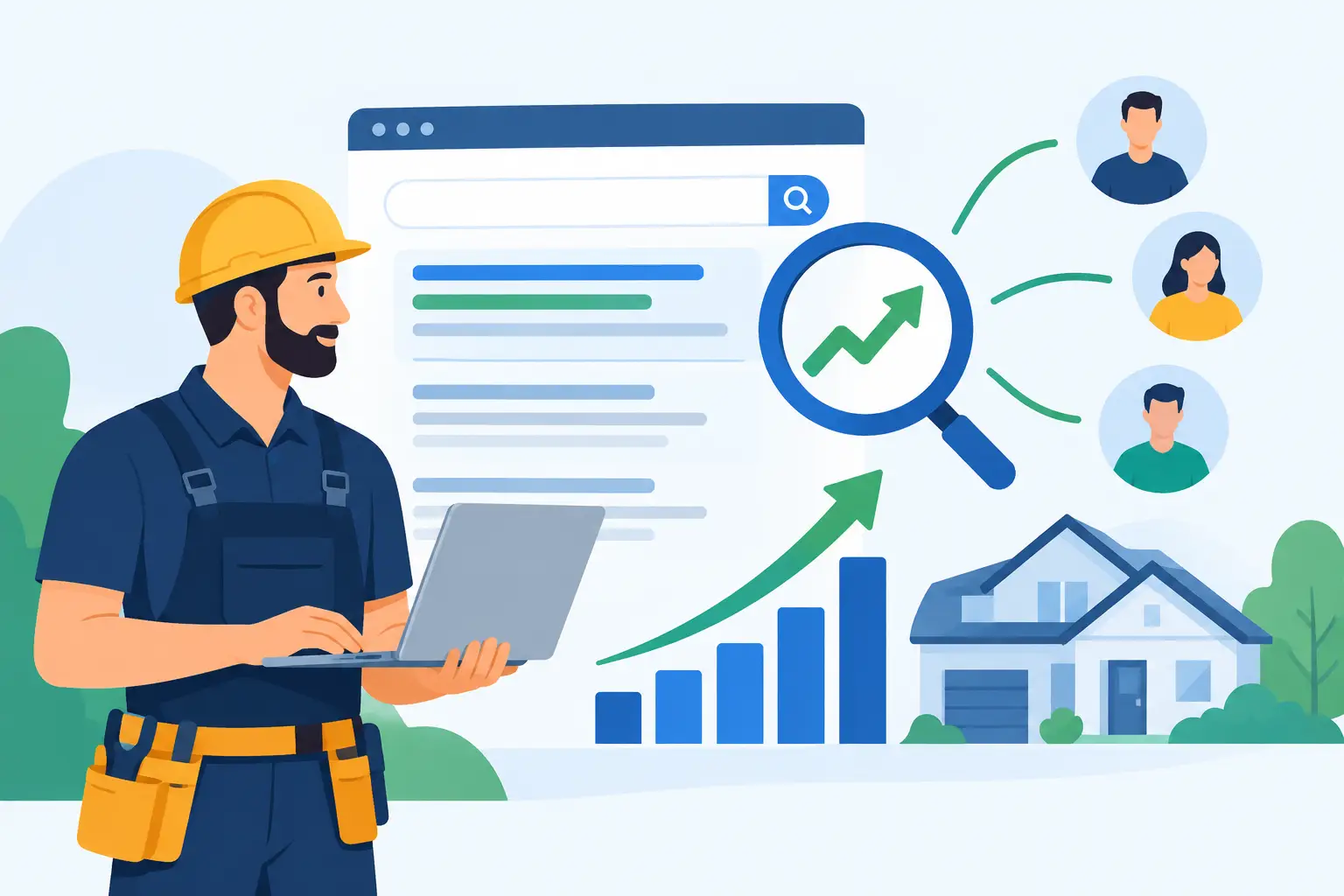
Contractor SEO Results That Bring Better Leads
Learn what drives contractor SEO results, how long progress takes, and which local search actions turn website traffic into qualified…
Gone are the days when a simple print ad or TV commercial sufficed.
In today’s rapidly evolving digital world, marketing has transitioned from straightforward promotional campaigns to complex, multi-faceted strategies. This shift has introduced new challenges for businesses of all sizes, making effective marketing harder and more time-consuming than ever before. Understanding these challenges and knowing when to outsource can be crucial for maintaining a competitive edge.

Gone are the days when a simple print ad or TV commercial sufficed. Now, marketing spans a wide array of channels: social media platforms, email marketing, content marketing, influencer collaborations, SEO, paid advertising, video content, and more. Each channel requires specialized knowledge, tools, and dedicated effort to maximize its potential.
For example, social media algorithms are constantly changing, impacting organic reach. SEO tactics evolve as search engine rules update, and paid advertising requires continuous optimization to ensure cost-effectiveness. Managing all these moving parts internally can stretch teams thin, especially for small and medium-sized businesses with limited resources.
Modern marketing isn’t just about creativity; it’s also about data, technology, and analytics. Marketers need a deep understanding of customer behavior, data analysis, and automation tools to deliver personalized experiences at scale. This often involves learning complex software, staying updated on industry trends, and testing different strategies—an ongoing, resource-intensive process.
Moreover, marketing talent with these skills is in high demand and can be expensive. Hiring full-time specialists for each area—content creation, paid media, SEO, analytics—can strain budgets, prompting many organizations to consider other options.
Creating a successful marketing strategy involves planning, content development, campaign execution, monitoring performance, and ongoing optimization. Each step demands significant time and effort. CEOs, founders, and internal teams often find themselves caught between running their core business and managing day-to-day marketing tasks.
This ongoing time drain can lead to burnout, missed opportunities, or superficial marketing efforts that don’t generate the desired results. In a competitive environment, inaction or half-hearted marketing can cost you potential customers and revenue.
Given these hurdles, many organizations are turning to marketing agencies or consultants. Outsourcing can offer several strategic advantages:
However, there are some important factors to consider:
One of the most critical aspects of outsourcing marketing is ensuring you get a worthwhile return. Your marketing investment should directly contribute to revenue growth, customer acquisition, or brand awareness that results in increased sales.
Agencies should be held accountable for delivering measurable results:
If your agency isn’t providing a clear ROI, it’s time to reassess your partnership. No amount of flashy campaigns or creative ideas is worth the cost if they don’t drive measurable business results.
Marketing has become a complex, ever-changing landscape that often requires more resources, expertise, and time than internal teams can realistically provide. Outsourcing can be a game-changer—if done strategically.
However, success depends on carefully selecting the right agency, setting clear expectations, and maintaining robust oversight. Prioritize partnerships that focus on ROI and transparency, and don’t hesitate to switch agencies if your goals aren’t being met.
In the end, smart outsourcing enables your business to stay agile, competitive, and focused on what you do best—building your product and serving your customers—while leaving complex marketing tasks in the hands of experts.