Email Versus Text Marketing for Local Growth
Email versus text marketing helps local businesses choose the right channel for promotions, reminders, follow-up, and measurable customer growth today.
Email versus text marketing helps local businesses choose the right channel for promotions, reminders, follow-up, and measurable customer growth today.
A customer who needs a roofer after a storm, wants to book a dental cleaning, or is comparing med spa services is not thinking about email versus text marketing. They are deciding whether to act, when to act, and which business feels easiest to trust. Your job is to use the channel that moves that decision forward without becoming another message they ignore.
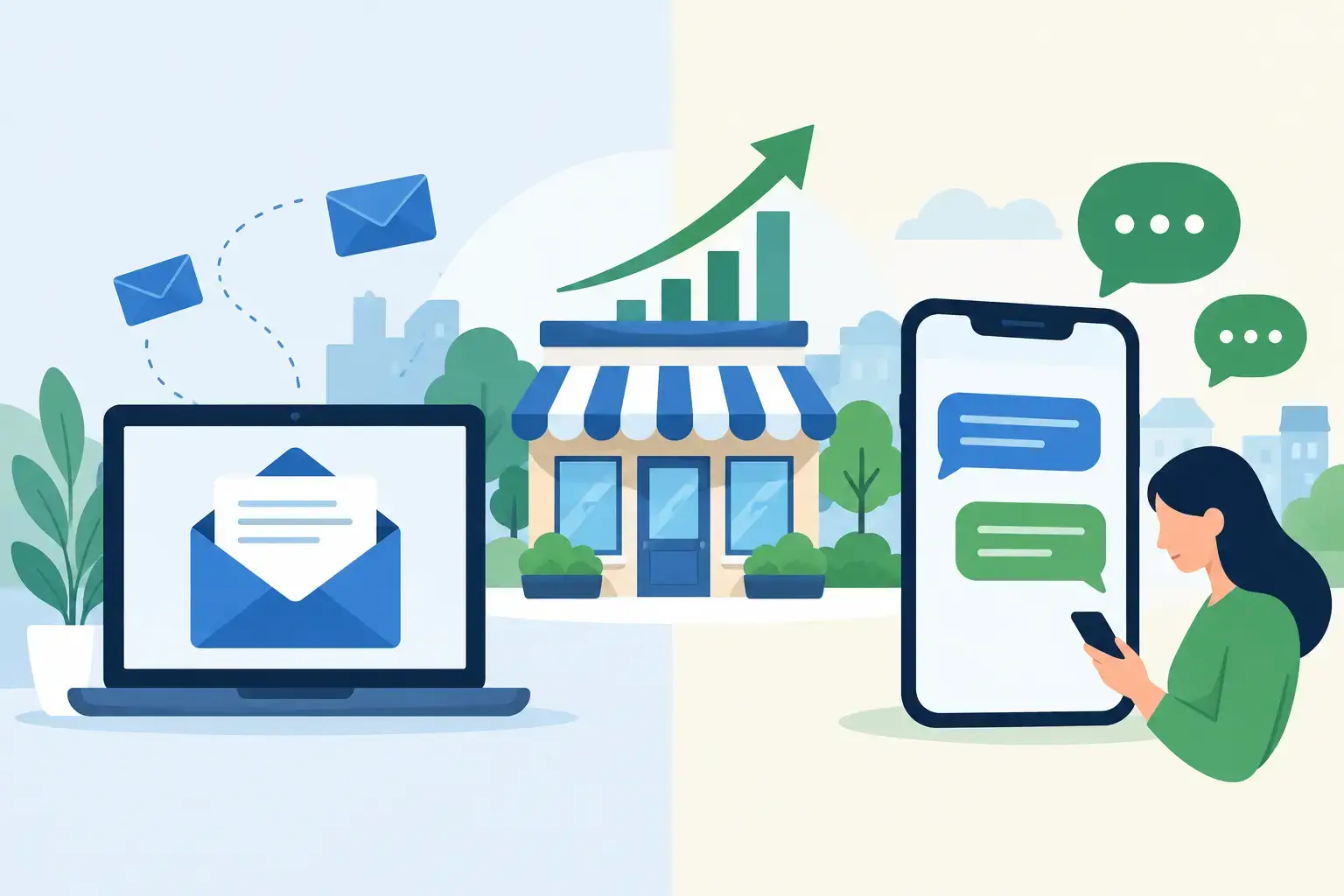
For small and medium-sized B2C businesses, email and text are not competing tools. They serve different moments in the customer relationship. One gives you room to explain, educate, and build confidence. The other gets seen quickly when timing matters. The businesses that get the best results know where each fits and connect both to a clear follow-up process.
Email is built for detail. It gives a landscaping company space to show seasonal project photos, explain maintenance packages, and share customer reviews. A dental office can use email to introduce a new service, explain insurance options, or send practical pre-visit guidance. A local retailer can promote a sale with product images and a clear call to action.
It also works well for staying visible over time. Not every prospect is ready when they first visit your website or submit an inquiry. A thoughtful email sequence keeps your business present while providing useful information instead of pushing for an immediate sale. This matters in higher-consideration services such as cosmetic treatments, remodeling, healthcare plans, and major home repairs.
Text marketing, often called SMS marketing, is built for speed and attention. Most people see a text quickly, which makes it especially useful for appointment reminders, limited-time offers, weather-related updates, event reminders, and fast follow-up after a customer requests information. If a tire shop has same-day availability or a contractor needs to notify customers about a weather delay, text is usually the better choice.
The trade-off is simple: texts are more immediate, but they are also more personal. Customers are less forgiving of irrelevant or frequent text messages than they are of emails. A text should have a clear reason to exist. If it does not save the customer time, answer a question, provide a timely offer, or prompt a useful next step, it may be better as an email.
Use email when the customer needs more than a sentence to make a decision. It is a strong channel for newsletters, service explanations, case studies, seasonal planning, educational tips, post-service follow-up, and reactivation campaigns.
For example, a landscaping business could email homeowners in early spring about lawn cleanup, mulching, irrigation checks, and recurring maintenance plans. The message can include photos, package details, and a booking button. That is too much information for a text, but it is valuable to a homeowner planning work for the season.
Email also gives your business more design flexibility. Consistent branding, before-and-after images, testimonials, and recognizable service categories help customers remember who you are. For businesses working to strengthen credibility in a competitive local market, that consistency matters.
Use text when the message is short, relevant, and time-sensitive. Appointment confirmations and reminders are an obvious example. A simple reminder can reduce no-shows for dentists, medical practices, salons, and service providers without requiring staff to make extra calls.
Text can also support lead follow-up. If someone asks for an estimate, an SMS message confirming that you received their request can make your business feel responsive right away. The full estimate, portfolio, financing details, or service explanation can then arrive by email or be discussed by phone.
Promotions can work through text, but only when they are genuinely useful. A restaurant’s weekend special, a garden center’s short seasonal sale, or a tire shop’s same-day offer may earn attention. Sending weekly discounts with no clear value can train customers to opt out.
The best channel is not determined by what is easiest to send. It is determined by what you want the customer to do next.
If the goal is to educate someone before they book, email usually makes sense. If the goal is to get a customer to confirm an appointment today, text is usually stronger. If a customer has just submitted a web form, a quick text acknowledgment followed by a useful email can be more effective than relying on either channel alone.
Consider these practical scenarios:
The pattern is consistent: email creates understanding, while text removes friction at the moment action is needed.
A disconnected campaign rarely produces consistent results. Sending an occasional newsletter and an unrelated promotional text may create activity, but it does not create a reliable customer journey. Start by looking at the points where prospects and customers need communication most.
For a local service business, that journey often begins with a website visit, phone call, social media message, or quote request. The first priority is a prompt response. An automated text can confirm that the request came through, while an email can set expectations about timing, pricing ranges, service areas, or what happens next.
After the customer books, text reminders help reduce missed appointments. Email can prepare them for the visit, answer common questions, and introduce add-on services that are relevant to their needs. After the job or appointment, email is useful for requesting a review, sharing care instructions, and encouraging repeat business. Text can be reserved for a short review request or a timely maintenance reminder when the customer has agreed to receive messages.
This approach also helps your team stay organized. Instead of manually remembering who needs a follow-up, you can build dependable communication around real customer milestones. That is especially valuable when owners and front-office staff are already managing calls, scheduling, operations, and customer service.
Text marketing requires clear permission. Customers should knowingly agree to receive SMS messages from your business, and every message should provide a straightforward way to opt out. Email should also use permission-based lists and an easy unsubscribe option.
These are not just technical requirements. They protect your reputation. Buying lists, adding contacts without permission, or sending frequent messages to people who did not ask for them can damage trust quickly. For local businesses, trust is often the difference between a one-time inquiry and a long-term customer relationship.
Frequency depends on your industry and the value of the message. A weekly email may be reasonable for a retailer with changing inventory or offers. A monthly email may be a better fit for a contractor or healthcare-related business. Texts should generally be less frequent and more purposeful. Appointment and service updates are expected. Repeated sales messages are not.
Open rates and click rates can be useful, but they do not tell the whole story. A campaign should be tied to a business outcome: booked appointments, estimate requests, calls, repeat purchases, reduced no-shows, or review submissions.
For email, look at which topics generate clicks and which offers lead to form submissions or calls. For text, track replies, appointment confirmations, redemption of offers, and opt-out rates. If people are opting out quickly, the issue may be frequency, timing, or relevance.
It is also worth comparing results by customer segment. A new prospect should not receive the same message as a customer who has used your service five times. A homeowner who requested roof repair information may need a different follow-up than someone who asked about a full replacement. Better targeting usually improves results without increasing message volume.
You do not need a complicated campaign calendar to begin. Identify one point where leads or customers are slipping away. Maybe inquiries wait too long for a response. Maybe appointments are missed. Maybe past customers never hear from you again after a completed job.
Then choose the channel that solves that specific issue. Use text for faster confirmations and reminders. Use email for education, nurture, and repeat-business campaigns. Once the first workflow is working, add the next one with a clear purpose and a way to measure it.
IT Resource Marketing helps businesses bring email, SMS, website follow-up, and ongoing marketing execution into one coordinated plan, so owners are not left managing separate tools and vendors. The goal is not to send more messages. It is to make every customer communication more timely, more useful, and easier to act on.
The right next step is often small: send a better confirmation, follow up with one useful email, or remind a customer at the moment they are most likely to respond. Consistency built from those practical moments can turn a quiet contact list into a dependable source of repeat business and new opportunities.