What Causes Low Website Traffic? 10 Fixable Issues
What causes low website traffic? Find the search, website, content, and local visibility issues holding back leads - and learn…

Learn how to build local business trust with a credible website, consistent reviews, responsive service, and local proof that turns searches into calls.
A homeowner looking for a roofer, a patient choosing a dentist, or a customer comparing cosmetic providers can make a decision in minutes. Before they call, they scan your reviews, website, photos, social profiles, and response time for one answer: “Can I count on this business?” To build local business trust, every one of those signals needs to tell the same credible story.
Trust is not built by one polished ad or a clever social post. It is built when your business looks active, answers clearly, delivers what it promises, and gives customers proof that people in their community have had a good experience. That consistency is what turns a local search into an inquiry, appointment, or estimate request.
Most prospects will form an opinion before your team ever has the chance to speak with them. That makes your digital presence part of your front desk. If your website is slow, your service information is vague, or your latest social post is from two years ago, customers may assume the same lack of attention will carry into their experience.
Your online presence does not need to look like a national brand with a massive marketing budget. It does need to look current, clear, and cared for. For a local service business, that means accurate hours, a working phone number, service areas, straightforward descriptions of what you do, and photos that represent your actual work and team.
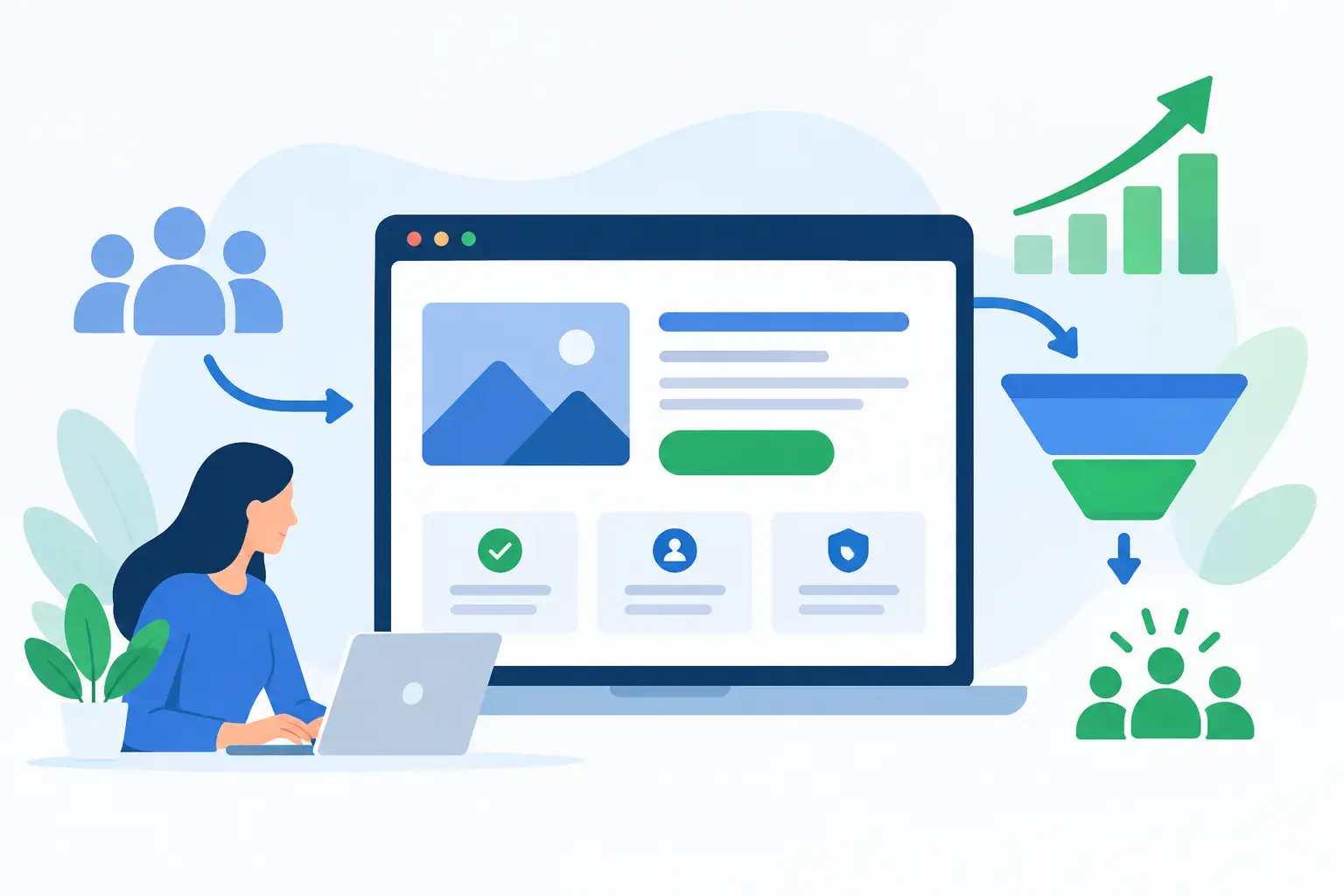
A polished website matters because it reduces uncertainty. Customers should be able to quickly understand whether you serve their area, what problem you solve, what the next step is, and how to contact you. A landscaping company may lead with seasonal cleanups, lawn care, and landscape design. A dental office may focus on new patient availability, insurance information, and appointment scheduling. Specific information builds more confidence than broad claims such as “the best service in town.”
Inconsistent information is a quiet trust killer. If one profile has an old address, another lists a disconnected number, and your website shows different hours, customers have reason to hesitate. Search engines also rely on accurate business details to understand and present your company in local results.
Review your business name, address, phone number, hours, website, and service area regularly. This is especially important after a move, staffing change, holiday schedule adjustment, or new service launch. A customer should receive the same basic information wherever they find you.
Consistency also applies to your message. If your website positions you as a premium cosmetic practice, your social channels should not feel rushed or generic. If your roofing company emphasizes fast emergency response, make sure your contact process and follow-up support that promise. Your marketing should set expectations your operations can meet.
Local customers are naturally cautious. They have seen exaggerated advertising, outdated offers, and businesses that disappear after taking a deposit. The most effective way to address that concern is to show evidence.
Reviews are one of the clearest forms of local proof. They are not simply a rating to display. They reveal what customers experience when they work with you: whether you communicate well, show up on time, explain options, maintain a clean job site, and stand behind your work.
Ask for reviews as part of your regular customer process, not only when business is slow. The best time is usually shortly after a successful outcome, when the experience is still fresh. Make the request simple and personal. A brief message thanking the customer and asking them to share honest feedback is more effective than a complicated campaign.
Do not chase only five-star praise. A steady pattern of recent, detailed feedback is more convincing than a perfect rating with little context. Customers want to see that real people have used your business for work similar to theirs.
Your review responses matter almost as much as the reviews themselves. A thoughtful reply shows potential customers that someone is paying attention. Thank customers by name when appropriate, refer to the service provided, and keep the tone professional.
For critical feedback, avoid arguing in public. Acknowledge the concern, state that you take it seriously, and invite the customer to continue the conversation directly. Some complaints will be unfair, and some will point to a process that needs work. Either way, a calm response protects your reputation better than silence or defensiveness.
You can build credibility further with before-and-after photos, project highlights, team introductions, short customer testimonials, and clear explanations of your process. A contractor might show completed exterior work and explain the timeline. A med spa can introduce licensed providers and describe what a consultation includes. These details help customers picture what working with you will feel like.
Use real material whenever possible. Stock imagery has its place, but it cannot replace photos of your crew, facility, vehicles, treatments, or completed jobs. Local customers want confirmation that your business is established and accountable.
A business can have excellent reviews and still lose leads through slow or confusing communication. When someone submits a form, sends a message, or calls after finding you online, speed matters. A delayed response gives them time to contact three competitors.
Set a realistic standard for lead follow-up. For many local businesses, responding during business hours within an hour is a strong goal. If your team cannot answer immediately, use an automatic response that confirms the message was received and tells the customer when to expect a reply. The key is to avoid leaving people unsure whether anyone saw their request.
Clear communication is not about sounding overly formal. It is about being useful. Tell people what you need from them, what happens next, and when they can expect an update. For example, a roofing estimate request may require an address, photos, and preferred contact time. Explaining that upfront saves time for both sides.
The same principle applies after the sale. Appointment reminders, service updates, maintenance tips, and follow-up messages keep your business present without becoming intrusive. For businesses with longer buying cycles, consistent email and SMS communication can prevent promising leads from going cold.
Trust grows when customers see a business repeatedly in relevant local contexts. That does not mean posting constantly on every channel. It means maintaining the places that influence their decision.
For most B2C companies, the priority is a dependable website, an accurate business profile, a steady review process, and social media channels that reflect current activity. Search visibility also matters because customers often begin with a problem-based search: “emergency plumber near me,” “Atlanta teeth whitening,” or “lawn treatment in [city].” If your business is difficult to find for the services and areas you serve, you lose the chance to earn trust in the first place.
Local search engine optimization should focus on useful service pages, location relevance, accurate listings, and content that answers common customer questions. Avoid stuffing every neighborhood name onto a page or creating thin pages with little value. Search engines and customers both respond better to information that is specific, helpful, and honest.
Social media supports this work by keeping your brand visible between searches. A consistent feed can show recent projects, customer education, seasonal offers, team updates, and community involvement. The goal is not to go viral. The goal is to make a prospect who checks your profile feel reassured that your business is active and professional.
The fastest way to damage trust is to market an experience your business cannot provide. Discounts, same-day promises, and bold guarantees may generate attention, but they can create frustrated customers if your team is not prepared to follow through.
Before increasing ad spend or pushing a major offer, check the full customer journey. Can someone reach you easily? Does the person answering calls know how to handle the inquiry? Is your scheduling process organized? Do customers receive confirmation and follow-up? Are website forms reaching the right inbox? These operational details are part of marketing because they determine whether a lead becomes a satisfied customer.
There are trade-offs. A business with limited capacity may be better served by improving response time and review generation before driving more traffic. A newer company may need to emphasize owner involvement, transparent processes, and early customer feedback while it builds a deeper portfolio. The right plan depends on your service model, market, and ability to deliver consistently.
That is why an all-in-one approach can be valuable. IT Resource Marketing helps local businesses align the pieces that customers actually see, from website maintenance and local visibility to social content, messaging, and technical support. Instead of treating marketing and day-to-day digital operations as separate problems, the focus stays on making your business easier to find and easier to trust.
Trust is earned one interaction at a time. Start with the customer’s next search, make the path to contact clear, and give them proof that choosing your business is a safe decision.